Tuesday, November 10, 2009

Going Nowhere, again


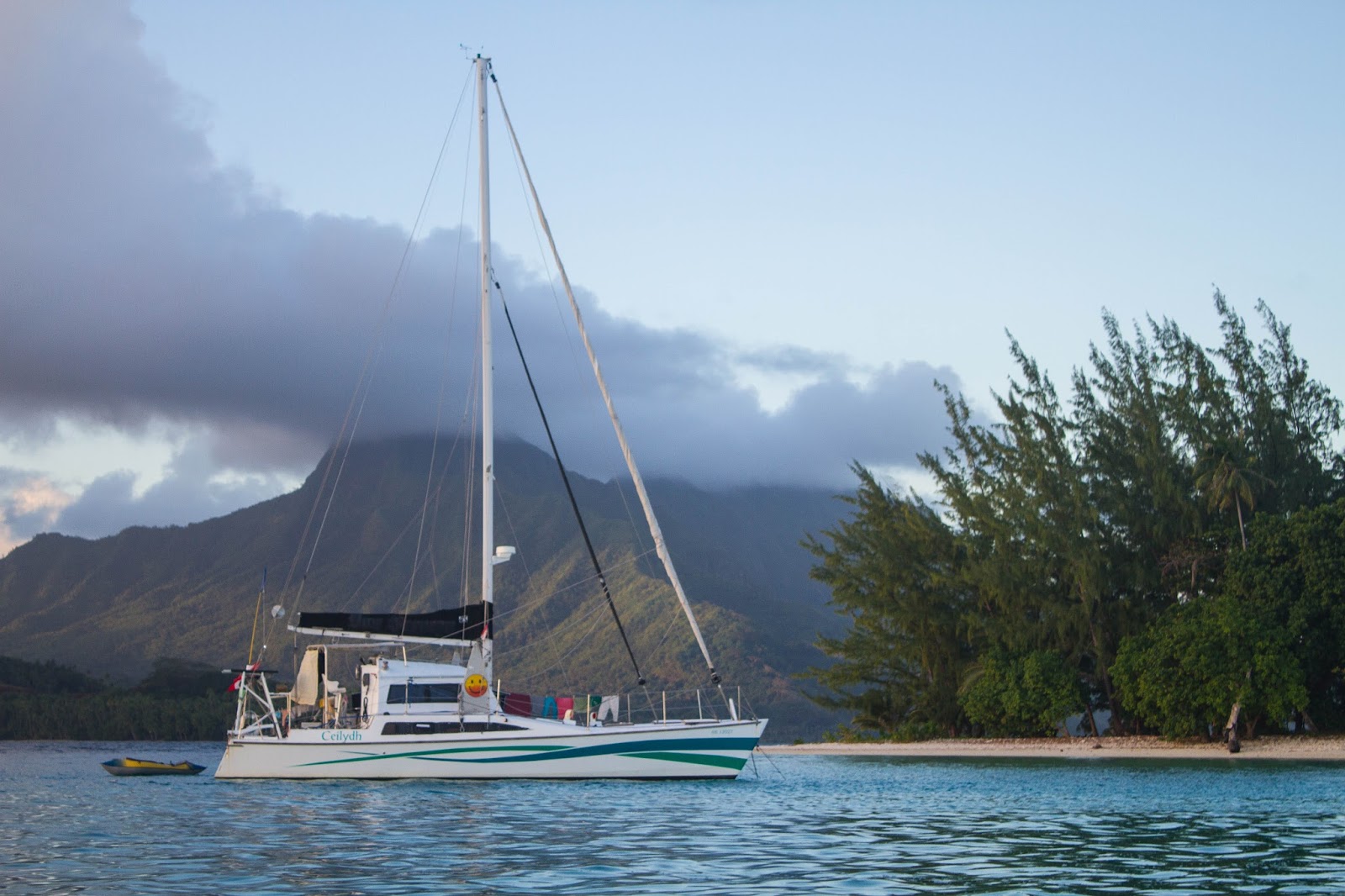
We’re in Half Moon Bay still. We arrived just ahead of the big swell that makes Mavericks surf break so famous. For 3 days massive swell rolled in across the Pacific and churned up a huge wave. The day we walked out to the point there were a half-dozen surfers out in the 20' swell. They use jetskis to get them in position.

The quiet protected anchorage at Half Moon Bay is a nice change from the noise and excitement of San Francisco. We’ve been getting projects done, visiting with friends and doing a bit of exploring. But we’re ready to go now. Our laundry is done, provisions bought and our next destination is picked out.


Mark and Val's new ridgetop property - lots of potential and lots of work

Unfortunately Mother Nature has her own ideas about these things – and the nice weather window we were planning to head out on (NW 10-20 knots 6-8 ft seas) is due to close before we can make it to Morro Bay – which is the sort of place you don’t want to be entering when the wind is hitting 30kts.

So we’re sticking around. I always find the moment when our plans evaporate, and throw us back into uncertainty the hardest. Guess I’ll learn to embrace it eventually – but I was kind of looking forward to Southern California…

Friday, November 06, 2009

We're Leaking


 If I had listened to my mum while I was growing up I would have known that bragging about our awesome weather would not only earn me ill feelings from others – but it might even cause one of them to put a cold and rain hex on us. Actually, she never said the hex part, but I’m pretty certain she told me that gloating isn’t very nice.

So I’m sorry. My last post was mean.
Can you make it stop raining now?
Please?

 I normally don’t mind the rain too much. When I lived in a leak-free home that had ample heat, and easy an easy way to dry clothes (and the kid) it was actually kind of nice to go outside and stomp through puddles.
But we don’t live in a leak-free home.
We live on a leaky boat.
A cold and damp leaky boat with indoor puddles.

 We discovered the leaks during our last rain storm. We had six of them (leaks, not storms). Six leaks is a lot and they included two leaking windows, one leaking hatch, one leaking heater, one leaking fitting and a mystery leak. Our mattress got soaked. And we had to use all our buckets and pots to catch the drips and then when it was time to make dinner we had nothing to cook in.
I though it might be a good excuse to go out.
But it was really wet out and the seats of the dinghy were soaked so we stayed home and went hungry. (See jinx person? This rain is really tough on us.)

 Fixing leaks on a boat is something almost every boat owner is familiar with. It’s such a popular topic that I’ve written quite a few variations of this article. So you’d think that we would be able to make our boat, a dry boat.

I thought I had a really good solution – avoid rain for a year, maybe two. My mistake was in gloating about it – so again, I’m sorry.
When you think about the fact we went from six leaks to two, we’ve really improved and are clearly quite good at fixing leaks (at least that’s what I tell Ev, so he doesn’t get too demoralized). As soon as the rain stops though it will be time to rebed and recaulk the leaking fittings (and quietly sneak south to places that are warm and where rain doesn’t fall.)

Heading south is actually a few more days off in our future. There must be a heck of a system brewing out there; our 5-7 foot swell is scheduled to grow to 15-17 feet tonight…

Tuesday, November 03, 2009

Chasing Summer


 Maia spoke with a friend from home last night who told her she was wearing her winter jacket to school. She told her that they have had indoor lunches the weather has been so bad. Maia went boogy boarding at the beach in Half Moon Bay after she finished her work today.

 We used to like the way autumn would blow into our lives, full of coolness and colour.

But this year the leaves aren't changing for us and the wind continues to blow soft and warm.

 Our winter clothes are still tucked away - almost like a memory.

It's almost as though we've been chasing summer from one port to the next.

Just saying...

Sunday, November 01, 2009

Sailing, we are sailing...


When you spend years re-building a boat, you stop sailing, you stop hanging out together and, if you’re not careful, you stop dreaming. Every weekend, and often weeknights, Evan would head to Ceilydh. Sometimes I would tag along with Maia and we’d all install hatches, lay-up fibreglass and remove old fittings. But mostly Evan worked alone. The project, while often fulfilling, also wore us down - it taxed our marriage, diminished our bank account and pulled us away from family and friends. If ever there were a time I longed to just go sailing - this was it. But instead, the tasks stretched on.


Then you hit the point when you're done, or done enough. And nothing can compare to that moment when the wind fills your sails and you're free. When you sail to the next harbour, with a warm breeze on your face and a dream in your mind, it's almost possible to forget what it felt like to miss yet another event because you had fibreglass to sand.

Ceilydh hasn't sailed since Oregon. We've put plenty of hours on the motor, but it's sailing that first brought Evan and I together and sailing has been what's propelled us through our years.


Evan likes to beat the pants off of the other boats. I like to gather friends and family and combine all the elements I love best. Both are good ways to sail.


Steve and Irma (before there was a Maia, Ellie or Clara) shared in our dream about someday owning a boat and sailing away. Later they sailed with us on little Ceilydh once we reached the east coast. They came with us today to test our repaired rig and see us off as we start south again.

Our day was perfect. The sailing was perfect.

Friday, October 30, 2009

Booo! Trying to scare up a decent Hallowe'en


It’s the holidays that really mark time when you’re a kid. And Maia, being eight, is at that intersection where the magic and mystery of the seasons is just beginning to give way to the reason of adulthood.
So holidays are important to her (which makes them important to us) but this whole sailing thing is putting a crimp in her joy.

So the pressure is on to make Hallowe’en special. We already messed up Thanksgiving and no amount of day-after-pumpkin-pie could repair the damage done when we failed to produce a turkey. Even though we had a nice dinner with good friends the absence of a bird and its trimmings was definitely noted and will probably come up in some future therapy session.

The complication with Hallowe’en didn’t come with not knowing when it would occur (Maia started counting it down right around our non-Thanksgiving) the complication came with the fact we didn’t know where we were going to be for the occasion - which made it hard to plan. Until yesterday afternoon our fate was in the hands of our riggers. But this morning, after signing a cheque that had quite a few numbers in it, we were released into the wilds with a mast that could withstand just about anything.

But today is the day before Hallowe’en and our next planned anchorage is two days away. See the problem?

So despite the fact that we’re parked at a dock beside a loud bridge and across from a cement plant, right in the heart of an industrial district – we decided being in a place we sort of know is better than going to a place we're clueless about. So we’re staying put and we’re going to make this work.

We have pirate costumes – thanks to the nearby Sally-Ann (actually we have a bunch of new clothes – this place has the best thrift stores ever!) And we have a pumpkin, which was carved with a ghoulish glee. The pumpkin seeds are roasted and the boat has a festive look. I've found an outdoor hybrid ice rink that’s having a Hallowe’en skating party (which is puzzling, but we’re game) and after our skate we’re going to parachute into the closest posh neighbourhood for trick-or-treating.

Hopefully, despite my worry about the holiday (which Maia claims is the best of the year) not being just right, a little ghastly enchantment will come our way. And maybe, with a bit of luck, childhood magic will soften the rough edges of our efforts and Maia will remember the year she went trick-or-treating in a strange and random neighbourhood with just her parents at her side as a good one.

If not we’ll send her to our friend’s place for their party next year – that should make up for it.

On a completely different topic, my other blog for a green living magazine called Granville just won Best Blog at the Canadian Online Publishing Awards, so feel free to pop over and check it out.


Saturday, October 24, 2009

San Francisco Days go on and on...


The weeks seem to be slipping by and here we are - still in SF. No further ahead than we were when we arrived.
Actually - we have made progress:
We have way less money now.
And our mast is held up by shiny new stays and lower shrouds. We're still waiting on the main shrouds because it seems who ever initially did our rig cobbled it together out of parts that our extremely experienced riggers say they have, "never seen anything quite like." So they've had to order a few unexpected things - which of course are on back order.

The upshot is they are impressed we made it as far as we did. Fab.

For the first week we were here I panicked about how far behind our non-schedule we were falling. In fact I was a pretty stressed right up until yesterday. But then, as we paid for an unplanned engine repair and I took on another last minute writing assignment (which will almost pay for the engine repair), I thought about all the loose commitments that pepper our calendar and tried to sort out how we could make it all work.

We can't.

So we've traded the whole non-schedule, schedule for no schedule at all. We're now at the mercy of the wind, our moods and my work schedule. We're not trying for the South Pacific in March, not worrying about where we are for Christmas, heck we're not even sure where we'll be for Halloween - which we're not telling Maia, she's pretty sure we have that one in hand.


It's all sort of freeing - in a disturbing sort of way. I can't quite tell if I'm giving up or letting go - the two things can feel remarkably similar some days.

The thing is, living with this much uncertainty isn't as easy as people think it should be. Consider all those straightforward questions that people ask:
Where are you going next?
Where can we send you mail?
When would be a good time to hang out?
What are you doing tomorrow?
Would you like to order now?

None of them have answers.
None of them.
Well, we're pretty sure we're doing our laundry tomorrow and I'll take a beer, but aside from that, Maia's Magic 8 ball has a better chance of predicting the future than we do.

Monday, October 12, 2009

San Francisco Days


 If you’ve ever traveled with a child you’ll know there are certain magical moments that come when you find a place that causes them to fully engage and leaves them wonderstruck. It’s in sharp contrast to those other moments, the ones when they are hungry, thirsty, tired, bored, cold, hot, have sore feet or want to buy that tacky souvenir and that one too.

As parents, we kind of aim for those sublime moments of fascination, but the trick comes in knowing where to find them and what will leave them awed (which I guess is why Disneyland was invented). The whole thing gets even more fraught when you want to show them a place you’ve been and that you loved. Because if you loved it, they probably won’t enjoy it.

The thing is, despite the fact we raise her and influence her heavily we still don’t really understand Maia. She doesn’t quite see the world the way either Evan or I do. She’s constantly surprising me by being fascinated by things that confuse me,  by being bored by the things that enthrall me and by being left cold by the things that move me. And she likes Brussel Sprouts...

 So when we got to San Francisco and started choosing what to do and where to go, Maia had her own ideas – and a chocolate factory (which I pointed out didn’t actually give tours and only had a retail store selling regular priced chocolate) was inexplicably at the top of her list. Riding on the cable cars barely rated, she didn’t like the hills. And the other options only got a shrug.


 The thing with kids though, is even if they don’t like the stuff you like, it's easy to learn to love the things they are fascinated by. There is something about that moment, when time slows down and every thought they are thinking is pure and clear on their face, that lets you know you’ve been privy to a moment of enchantment.

 It’s worth searching for – even if it takes you to places you never meant to go. And makes you speed through the places you really thought you would linger.

For those wondering about our rig, we moved to a dock in Alameda this morning. We're really pleased to have arranged for Glenn Hansen to be our rigger (and equally thrilled that our dollar is doing so well for when it comes time to pay him!) Glenn will be taking apart the cap shroud that failed and will let us know what happened to the damn thing. Then we'll get to be a sailboat again!!

Wednesday, October 07, 2009

Leaving Harbour


Deciding when to leave a harbour is rarely straightforward. If we leave when we’ve seen everything we wanted to see, done everything we’ve wanted to do and spent enough time every interesting person we meet – we may never get anywhere.
We need to leave when the weather is right for leaving.

I was thinking about this the afternoon before we left Eureka. A silver-haired fisherman named Ken had slowed his boat down while passing our boat and pointed out a dock on Indian Island. “That’s my dock. You can go for a walk on the island. There’s lots of deer.”

We decided to go for a quick walk before heading to the grocery store to load up on passage food. We couldn’t take long because in the morning the perfect weather window was opening up – one with flatish seas and almost no wind to strain our damaged rig. But the lure of Indian Island’s storied shores made us squeeze it in before shopping and readying the boat to go south.


Our walk was nice – we saw a red-bodied hawk, snowy egret and heard a deer. Then just as we were leaving, to rush to the store before it closed, Ken and his partner Linda invited us into their historic old cabin. The practical side of me wanted to get going – we had food to prepare, routes to program into the GPS and stuff to store away.

We followed Ken into his cabin and learned when it was built. All through the rooms were clever built-in cabinets, the sort of building modifications that always mark the homes of sailors and fishermen and ones that made me think of the books I needed to put away. He showed us old pictures and told us how Eureka had changed over the years. I wondered if San Francisco had changed since my last visit.

With each twist in the conversation my mind would slip off. I’ll make chicken stew for a passage dinner, with extra potatoes, I thought, as Ken began to walk us down the coast – describing each contour and harbour the way only a fisherman – who has seen every bay in every type of weather can describe. I thought about needing more ginger ale as he talked of storms. It tried to recall where I had stashed my hat and mitts while he told us about his garden – not because I didn’t want to hear, I wanted to hear.

I wanted to sit by candlelight, sipping wine and listening to his generous stories.

The desire to stay conflicted with our need to leave and we said goodbye. Ken gave us a jar of sparkling peach jam, for passage sandwiches, he said. Maia could make those while I cook, I thought.

We thanked Ken for his gifts – the jam and the stories.

And we prepared to leave.


In the first light of morning I looked back at Ken's dock and then I looked forward, toward our next destination, hoping for a gentle passage.

Saturday, October 03, 2009

Apple Festival


Writing about the fact that we spend much of our time visiting beautiful places, but never take the time to see them as tourists, made us (well, me) decide today needed to be different. We needed to explore. Especially because it doesn't look like our next weather window will be arriving for a few more days...


When I told Ev and Maia that the other options for the day included trouble shooting the broken autopilot (In Sidney we made a last minute purchase of a new unit after spending the summer fighting with the one we had, but we still have to repair the original), sorting out why the diesel is burning too much oil (may be from that time we sunk the hull…), or doing a general boat clean - taking public transit for an hour to Fortuna, for the annual apple festival, won.

Fortuna is a small town; nestled amidst a number of other small towns, in an area the California tourism people have dubbed ‘the lost coast’. And, as we strolled down main street Fortuna, taking in the beanbag toss, the jumble sales and the pie baking and Dutch oven contests (still uncertain what this was…) we realized we were at an authentic small town celebration and definitely not at an experience developed for tourists.

 Actually, I realized it wasn’t a tourist event when one of the organizers expressed shock that a visitor all the way from Canada had heard about Fortuna’s festival. “Sometimes people come from as far as Eureka,” he said “but we don’t tend to get the tourists.”

 The focus of the festival was the local cidery – which was celebrating its 100th anniversary (it even has a few original old trees). I have a thing for heritage apples, it grew out of my discovery of the old orchards in BC’s Gulf Islands (which blossomed into several articles on the topic) so anytime I get to eat an apple from a really old tree I’m pretty much sold on the outing.

The other thing that made me decide that Fortuna was worth an hour’s ride (each way) on public transit was the promise of hay rides.


Sadly, hayrides are like hot air balloon rides – they are far more exciting to contemplate than take. Our hayride consisted of a few bales stacked on a flatbed and pulled through city traffic by a tractor that seemed to be lacking a clutch (or something rather important) past the mall and out to the orchard where we drove past apple trees and ate apples.


 It’s easy to be sarcastic when faced with a sweetly hopeful small town event, to mock the church ladies selling their cute little hand-crocheted doggie smocks, to poke fun at the egg smash game and at the local museum, which boasts a display of over 400 types of barbed wire. But despite the fact we came from somewhere else, knew no one and were at a local event for local people, we were welcomed warmly.

 And for a moment, when I chatted with the antique store lady and eavesdropped on a conversation between Joy and Linda about Clare’s daughter who was pregnant with twins, again and would need everyone’s help, I wondered what it would be like to live in a little town where someone called Anna won both 1st and 3rd place in the pie baking contest and where people celebrate 100-year-old apple trees with pulled pork sandwiches.

I wondered what it would feel like to belong.

Friday, October 02, 2009

Eureka!


We’re often asked how we spend our days.
This is an especially good question when we arrive in a lovely port like Eureka, California. The old town has loads of history – starting with its name. The Greek word “Eureka” means “I have found it!” The name’s a reference to the role the city played during the 1849 Gold Rush when the Josiah Gregg expedition rediscovered the entrance to Humboldt Bay (it had been found and noted before – but then lost because it’s a very narrow river opening). Given its popularity with gold seekers, in 1849 California was in dire need of a second safe harbour, beyond San Francisco. And despite its tricky bar (where the bones of more than a few ships rest) Humbolt Bay was the answer. In 1850 the first ships arrived soon after the town was established by lumber barons and gold miners.


Considering this intriguing history, it’s easy to imagine us getting up early (to the sounds of local bird life and the lapping of water on the hull.), having a leisurely breakfast (while reading the local paper, which we picked up in town on our arrival) and then spending a short while tidying up the boat before heading to shore. There we would explore the historic old buildings, pausing to admire the stunning examples of Queen Ann architecture nestled side-by-side the old Italianate style ex-brothels and saloons before taking in all of the towns highlights – like normal tourists.

It’s not like that.

We do get up early. Madaket, the tour boat run by the Humbolt Bay Maritime Museum, wakes us each morning when it blows its whistle before heading out on an early tour of the bay. The boat has taken to including us in its narrative and when it passes we hear a voice over the loud speaker booming out a story about Canadians fleeing winter by boat and making their way south.


When we do get to shore (after Maia has done her school work and I've finished my assignments) we bypass the typical tourist offerings – our budget will only stretch to include so many attractions and we have stuff to do. We need to find the grocery store, laundromat, hardware store, book store, marine store, gas station (because the fuel dock is closed and we’ll be ferrying jerry jugs of diesel back and forth to the boat until our tanks are filled), post office and pharmacy.


We do vary our route while we run our errands – to take in different streets and different views. We see the nice shops that attract tourists – and even wander inside to pick up a post card now and again. We read the restaurant menus and peak through the windows of hotels.


When we arrive in a touristy place like Eureka, we understand we’re not tourists. Rather than spending our days on sojourns into the redwood forest, we look for docks where we can fill up our water tanks. Rather than exploring the entire city – we content ourselves with knowing the strip of waterfront across from our boat.


I sometimes wonder though, when we miss the galleries but learn the life story of a clerk at the marine store, if spending a week living in a place, rather than visiting a place, helps us to know it more deeply?

Wednesday, September 30, 2009

The non-Tsunami

Fishermen, emergency workers and the curious mingled in Crescent City Harbor on Tuesday night, anticipating ocean surges in a place that has seen more than its share of them.
But at 11:15 p.m., as the water near the mouth of the inner boat basin started bubbling like a river current from an incoming surge, anxiety was replaced with laughter and relief at the underwhelming spectacle.
According to Del Norte County’s Emergency Services Manager Cindy Henderson, this was the pinnacle of Tuesday night’s tsunami and it only reached a height of about 16 centimeters, or about 6 inches.

Glad for them it was a non-event. Glad for us to be in Eureka. Although the night sail inspired a few seasickness Haiku...


Waves steepen, confused
Towering, topple irate
My stomach rebels

Tuesday, September 29, 2009

Tsunami is coming, maybe


Seems like we're leaving Crescent City now, whether we're ready or not. We've been alerted that the Samoa Earthquake Tsunami is making its way across the Pacific as a 2ft wave. Normally this wouldn't be a big worry, but we're in Crescent City - a place that is pretty much Tsunami Central on the coast.

2006 aftermath
Its unfortunate harbour shape has caused it to been pummelled by waves so often that yet another wave barely makes the evening news. A wave that hit in 2006 was described as a fast moving river that surged in and out of the harbour for hours - sinking boats and breaking up docks. The 1964 wave took out 29 city blocks.

1964 aftermath
Crescent City's Port Captain, who suggested the open ocean is a nice safe place to be during a tsunami is considered a tsunami veteran. Nobody should be a tsunami veteran...

So rather than hanging out and seeing how bad it may, or may not, be we've decided to get back with our southbound program and use this as an excuse to head to Eureka. If we’re going to have to spend the night awake watching for waves – we might as well watch the ones that carry us to warmer climes…

Our hearts and thoughts go out to those devestated by the surge and waves.

Sunday, September 27, 2009

Ceilydh Under Construction


I first made this a while back (but updated it today). If you haven't been with us since the beginning of this journey, this is a 4 minute recap of the boats 'de' and 're' construction.

Saturday, September 26, 2009

California Dreaming


"When can I learn to surf?"


 "Whenever you like."
One of the joys of cruising is we get to make our dreams come true. Maia's been wanting to try surfing for ages and had her first taste of it today. It was unplanned and unexpected and she says it was better than anything she ever imagined.

Thursday, September 24, 2009

Not a Beginner’s Coastline


"It's not a beginner's coastline." This is what our dock neighbour said to us, shortly after we watched a Seattle boat get towed into Coos Bay by the Coast Guard.

Ollie left Neah Bay a day or so after us and decided to go with convention and headed way offshore. This was an especially safe choice for a single hander. Those who go down the coast closer to shore have to thread their way through fish boats by the fleet and dodge fast moving freighters. There’s no time for catnapping when you’re on a boat that often doesn’t show up on radar.


But the problem with the offshore route is that storms can come up quickly and unexpectedly. And after a couple of days of sailing south, Ollie was hit by storm and then a rudder-breaking wave. It took him almost three days to navigate his way closer to shore – and he only made it by using a bit of awe-inspiring seamanship and ingenuity (he steered using a windvane). Close to shore he radioed the Coast Guard, who cheerfully went out to fetch him and bring him across the bar. Then he called his mum, to let her know he was safe.


In every port we hear these stories and I start to wonder if too many of us are out here with not enough skills? Or, if it really is that hard…

We had an easy enough passage from Coos Bay to Crescent City, but easy enough didn’t make it fun. As folks we met on another boat (who were escorted by the Coast Guard over yet another bar) said – the fun to sucks scale doesn’t start to tip until after San Francisco.

 the Eureka Bar on a bad day

We set off across the Coos Bay bar in an easy swell. This coast doesn’t have many traditional harbours, instead, where the ocean and a river meet there is a dredged channel leading into a harbour. So, as the ocean water gets shallow, the waves steepen and pile up closer together (think waves breaking on a beach). Then when you hit the section of the channel where river silt is deposited (the bar) they can get really quite steep. You need to cross the bar when the tide is flooding, otherwise the whole thing is a big lumpy chaotic mess. But this means bar crossings can only happen at specific times and those times are often not when you’d like them to be.

But anyway, we crossed when we were supposed to and set off on the 125-mile overnight passage to Crescent City. The wind was still light, but it was light and in our face, which made conditions lumpy, which made Charlie the Cat throw-up.

Then the fog set in. A thick, dense fog that at times obscured our bows.

This isn’t a beginner’s coast – but we’ve learned how to read radar well enough. I can pick up just about any boat in the big swell, even if it just flashes for a second here and a second there.
You call on the radio when that happens – to ask who’s out there, what direction they’re heading and if you’re in danger of colliding. I always want to ask what the hell they’re thinking, motoring around in the fog, at night, but then I’d have to answer the same question. 
And despite the fact we can't see the stars or lights on the distant coast, we know where we're going by following our GPS track. We trust it implicitly when it says to steer 180 degrees and then program the auto pilot to make that course.
Then we plow on blindly through the dank night, trusting our electronics, cosy inside the cacoon of our dark saloon.

The fog stayed with us to Crescent City. We missed seeing the classic St. Georges Reef Lighthouse in the darkness. We saw the rock strewn entry and the bouys marking a safe path in on radar - long before we saw them with our eyes. We heard the fog horns and just caught the glow of the light from the Battery Point Lighthouse as we motored into the flat calm of a harbour of refuge.

Battery Point Lighthouse
As we dropped our anchor, I thought of the ships that plied this coast for the 150-years before radar, GPS and radio.
I imagined their foolish bravery.
I’m humbled.

Monday, September 21, 2009

Best Laid Plans...


Things don’t always go as planned.
This is a truism that works for just about everybody, but when you’re out cruising it’s even truer…

Pretty much the first thing that every offshore sailor learns is not to plan. Yes, you need a general idea of where you want to go and when you might like to get there but if you insist that the two things (the where and when) need to coincide, you’re asking for trouble, or at the very least an uncomfortable trip.

This is why we’re still in Coos Bay. A place we never intended to stop, and that really never warranted a week or more out of our lives, but that has kind of grown on us.

We’ve announced our departure from the dock a few times now. The first time we had a weather window I got a sudden assignment with a pressing deadline. Weather windows crop up with some regularity, but every assignment is precious, so we skipped our departure and I put in some computer time. It turned out to be a good decision because a boat that left during that same so-called weather window got pasted – an experience we’re typically not keen on and are especially trying to avoid until our rigging is redone.


Departure number two was cancelled when we decided that a rather benign sounding weather report had a sinister undertone to it. Neither of us was really sure what the problem was, but there was something hinky about the lack of information on the after midnight part of the report. In other words – the weather was fine, we were nervous.

But today, today is perfect. A high has filled in. The sky is bright blue. The winds are whispering in the lightest, most gentle fashion. The seas are barely swelling and it’s all scheduled to stay this way. It’s all we can ask for when embarking on a trip south with an unreliable rig.

So we started doing our predeparture stuff early in the morning: Downloading a few podcasts to listen to on night watches (why not use the midnight hour to get a bit smarter?); cooking a few underway meals; tiding up the boat and overhauling the diesel heater (just in case the nights are chilly…)

I was down in the galley wondering why my milk (for scalloped potatoes – always soothing for sensitive, slightly seasick tummies) had a black film on it, while Evan was cheerfully vacuuming out the built-up soot from the heater. Then I looked up and gazed through a grey haze that was reminiscent of the coal fogs in England that followed the Second World War (gotta love the information gleaned from a podcast…) I asked Evan if the vacuum was working and he insisted the haze was caused by smoke, likely by something I was cooking.

I wasn’t cooking.

The vacuum hadn’t liked sucking up soot and in protest it pulverized the oily carbon and sent it out in a cloud of sticky, fine, black nastiness that coated every surface of the boat's interior, including the cat, who was leaving cute little black footprints everywhere he went as he tried to avoid black lung.

Considering we’re at a dock, which has ample fresh water and a laundry facility with the cheapest machines we’ve yet to encounter, our decision was made for us. We stayed. We turned on the podcasts I had painstakingly downloaded (on the slowest connection imaginable!) and began to scrub, and scrub and scrub. And then scrub some more.

The moral (there’s always a moral) is not what you think. Sure plans are always subject to change, and the best laid plans oft go awry, and life is what happens when you’re busy making plans… But I’m not about to give up making plans - because they're important. They get you from A to B and then motivate you push on to C even when B has cheap beer, and easy anchorages, and nice people. They inspire you and give you the feeling that you’re really living and experiencing all that life offers the very best way you know how. Plans are what assure you that you're not just scratching the surface of life, that you're getting down into the juicey bits, and savouring the parts that really make it all worthwhile.


No, the moral isn’t about not making plans and not having goals, it’s simply about letting goals go when they don’t work out. It’s about enjoying the podcast while you clean the boat and then using the free afternoon to head out for icecream after doing laundry. It's about not regreting the moments you didn't get and the sights you didn't see. It’s about believing that weather windows will come again and that you’ll leave tomorrow.

Sunday, September 20, 2009

How to Recognize a Cruising Boat


One of the best parts of cruising last time were the sailing friends we made. 
Unlike the way you make friends on land - cruising friends are usually made over some shared mishap, or a series of shared mishaps...
There is an unwritten code of the sea – if someone needs a hand, you give it freely. This can mean the big stuff; like rescues, or the smaller things; such as taking someone’s lines when they arrive at the dock, or the inconvenient things; like standing out in the pouring rain helping your neighbour re-tune his rig (thanks Mike!)

When we first headed out, we wondered if the cruising code would have changed after 14-years. After all, the world has changed a bit and there are a lot more boats out now, so we thought the easy warmth and generosity we felt last time may have faded a bit. But if our first few harbours are any indication, cruisers are still friendly and as willing as ever to point the way to hot showers and cold beer.

While some cruisers belong to clubs and find each other by noting burgees, or keeping track of each other on radio nets, we're not joiners. So we look for other signs that a boat is a cruising boat. There are a few obvious signs that a boat might be out for an extended cruise – the exotic flag they fly, or a faraway home port on the stern. But those clues are less reliable than you might think.

The real way we recognize each other are the more subtle signs:


 A big one is how and when a boat arrives in harbour. Not everyone comes in with assistance, but we do tend to arrive looking a bit dazed and uncertain and dressed for a gale, no matter how lovely it is out. And we smell.


 The jerry cans stored on deck - sailboats never have enough diesel or water tankage for longer passages.


 The self-steering gear – hand steering for more than a day sail is mind numbing and we tend to avoid it.


 Jacklines – These are strong lins the we clip our harnesses to for offshore travel so we’re not washed overboard.

 Power sources - Most boats sport either a wind generator or a a bunch of solar panels or a combo of the two. The goal is to be self-sufficient so you only need to head back into harbour when you run out of beer or vegetables.


And assorted junk - because we all need our junk...

Thursday, September 17, 2009

The Smoking Gun

So we’ve found the smoking gun that caused the wobbly rig.
This bit might be better written by Evan, because despite the fact I’ve written a number of technical articles, I’m not particularly technically minded.
I just fake it.

Anyway, the recap is: while sailing toward California the wind came up on our nose and so we tested out our ability to heave-to while we decided what we wanted to do (we both have the goal of avoiding as much bad weather as possible while Maia gets her sea legs.) While hove-to we noticed that the mast was bending over, the wrong way. Not that there is a right way for a mast to bend…

It was 4am on a windy, moonless and overcast night, aka dark and stormy. Ev got the sails down pronto, which was a bit of a tough thing because we were trying to keep the wind on what appeared to be the strong side of the mast and the sails slightly filled while he was hauling them down.

Then Ev checked all the shrouds to see which of them had gone.

None of them had broken, which rather confused us. But then again it was the middle of the night, on the 3rd night of our first offshore passage, that’s a generally confusing time…

So Evan secured the mast as best he could and we began to motor back the way we came, to the closest safe harbour, which was Coos Bay.

When the sun came up and Ev rechecked the rig, we were still confounded. We had one very slack inner shroud and a general looseness in the rest of the rig but no obvious failures. If we didn’t know better we would have guessed that some sort of shrinking spell had been cast on the mast during the night.

Once we were in harbour the first working theory was that the spectra lashings on our stays had undergone some construction stretch, or creep. But even after Ev had retuned our entire rig, the loose shroud stayed loose. So we looked at it more closely and saw this:

Which if you look closely at the faint line about 1/2 a cm under the swage you'll see it looks different than the other side which looks like this:

Our best guess is the wire has pulled through the swaged fitting about 4-5 cm (the swage doesn't seem to be crimped on it's whole length.

So now it looks like this:


And when we get to San Francisco we’re throwing a whole lot of money at the problem so I can go back to worrying about serious things like when I should buy the chocolate chips

Monday, September 14, 2009

Not Quite California – Aka this coast hates us.


We’re not quite in California – despite the fact it was our goal. Our idea was to get passed the Washington/Oregon coast (also known as the graveyard of the Pacific…) as fast as possible, not because it isn’t lovely (at least from a landlubbers perspective) but because the last time we went down this coast it spanked us, hard.

Last time we followed convention and set off for San Francisco in a nice north westerly. Within a few hours the wind switched to southerly, the seas steepened and our tacking angle made it seem like we would be out at sea indefinitely. Finally, after 3 days of unrelenting wind, very little sleep and a whole lot of being tossed about (and a small leak which caused us to sink a bit) we headed for the coast – only to find the river bars were closing and we were about to be hit by another storm. After discussing our predicament with the Gray’s Harbour Coast Guard they escorted us in through a river bar that was sporting 15’ breaking seas into an isolated little harbour where we waited, shopped for flannel clothing and hoped for another weather window before the snow came.

It was almost enough to make us give up cruising.

It took us several months to rebuild our confidence after being bashed about on that trip. So this time we both wanted to avoid the whole miserable coast and just get to California.

We didn’t.

This trip started out like the last one. A nice NW wind carried us out the strait and around the corner into long rolling swell. Then within a few hours the wind died. It came up every so often but rather than sailing, we were motoring to California and it didn’t take many calculations to determine we don’t carry enough fuel to motor to California…

Despite the fact we weren’t sure how far we were going to make it, the motorboat ride was mostly nice. The swell was running an uncomfortable 10-12 feet from a westerly storm in the far off waters, but we saw perfect sunrises and sunsets as well as marine life including dolphins, sea lions, a shark and a humpback whale – which gave us a whale of a show.

Every so often we’d get a bit of wind and manage a few hours of sailing. Slowly we crawled our way down the coast. On the third day it looked like we might actually make California.

Then, just off Cape Blanco the wind came up.
And up.
From the south east, which was exactly where we were headed.
And the seas grew.
And then something went dramatically wrong with our rig and our mast bent way over and began to oscillate in a way that a mast shouldn't move. Which for you non-nautical types is a bad thing.


Bad things always happen at 4am and always on the darkest nights, which tends to make them bad, bad things. But as the wind howled and the boat rocked, Evan wrestled down the sails and worked to stablilize our mast. I tried to reassure Maia who was awake inside and then tried to find a safe direction to steer.

The only thing we could do was head back to Oregon, which meant crossing a potentially dangerous river bar with a destabilized rig. As I spoke with the coast guard and outlined our plan, the situation brought back every single memory of the last time we did this.

And the realization that this coast is cursed for us.

So now we’re in Coos Bay, which is lovely and friendly. The mast is still wobbly and we’re working out theories of what happened (which we’ll cover in another post.)

We’re both surprisingly calm and confident though. I guess dealing with things and getting into harbour safely is a sign that lets us know we’re more than capable of handling what comes our way.

Or it’s a sign that we just shouldn’t be out here at all and we're just too stupid to pay heed…

Wednesday, September 09, 2009

Passages


Some people say passage making is hours of boredom interrupted by moments of terror. By that definition we’re on a boring passage out the Juan De Fuca Strait. The sea is glassy calm – so calm that as we motor along I’m able to spend my time watching sea birds squabbling over a perch on a kelp raft, as well as the slow process of a mama and baby dolphin as they swim across our bow and make their way north.
This is the same body of water that my great x5 grandfather, Charlie Taylor made his way down after a trip up from San Francisco during the gold rush, about 155 years ago. He probably would have sailed through the same low pacific swells (if it was a calm day) toward Victoria, then just a muddy little Hudson’s Bay Fort that wasn’t yet part of Canada. For whatever reason he never headed off to the gold rush – instead he claimed the Island as his home, something I find myself grateful for as Victoria and the rest of BC faded into the distance behind us.
This passage, more than any other milestone this summer makes it feel like we are on our way. Until now we have been saying our slow goodbye – now we are on our way toward something new. I was trying to recall how it felt when Ev and I made the same passage 14-years ago. Too many memories have mixed together to make that moment distinct though. All that comes back as I watch our wake fade away and the familiar mountains recede is the memory of seeing dolphins – but that time they were leaping in our bow wave rather than making their quiet way through the glassy calm.
While the miles drift past, I’m reminded why I like the rhythm of passages. There’s an order to our day that we don’t find on land. We sit and eat breakfast together, then we do our chores (Maia does her school work and I write while Evan does boat chores, or whatever it is Evan does…). We all take turns keeping watch and slowly the day unfolds, the light changes, the wind rises and falls, clouds fill in and mist dampens the air, we avoid logs and kelp, we spot freighters and we contemplate our next meal. All of it is blissfully dull, with lots of time to read and relax and the knowledge that we are getting somewhere – even if it all feels as leisurely as a holiday.
Tomorrow we leap off for California. May it be just as blissfully dull as this.

Monday, September 07, 2009

10:00 AM

We were up early again today.
There was no sunrise this time, just sort of a gradual brightening of the grey drizzle. Even though the weather is still acting a lot more like October than we’d like, it’s time to move on. We need to get a bit closer to Neah Bay so that when (if?!) we do get a break in the lows that are marching across the Pacific, we can make a run south.

So we were up at our version of the crack of dawn: 8ish.

We’re not good at getting an early start. I’m not sure why. We’re both more than capable of waking up early to get to say, the airport. But when it comes to getting the boat underway before 10am, we can’t do it.

We’ve tried.

On little Ceilydh we often had passages that would take us about 15 hours. So our thought was that if we could get underway just before the sun rose, we’d be anchored and sipping sundowners when the sun set. Inevitably though we’d sleep through the dawn, wake to bright sun and end up dropping our hook by spotlight.


But today we were up early. And unlike most days, when we watch an anchorage empty out while we’re still in our pyjamas, today we were one of the first boats to get moving. Our first stop was the fuel dock. After two solid days of gales we knew that it wouldn’t take long before the dock had a huge queue. So while the other boats slumbered, we ate our oatmeal and then dressed in our cozy foulies so we could pull up our anchor and get there first.

Then it all went to hell.

For whatever &?&!!*#! reason the !*#$!! crab fishermen lay their traps right through the anchorage. We know this. We watched in shock as one went blasting through the crowded harbour tossing out his line of traps all willy nilly. I think we planned to make a mental note to be aware of this when we pulled up anchor. But it was early and we were sleepy. And we caught one of the lines – but failed to notice it until it was well and truly wrapped around the propeller.

Evan was able to slice the line but when he started untangling it, we discovered that somehow one end of the line had worked its way deep into the cutlass bearing – which for you non-nautical types, is a bad thing. So we re-anchored the boat using the outboard. Then I took a good long swig of my cold coffee (pretending it was something stonger) and we both wondered just how many days and how much money a stupid peice of rope would set us back…


As a last ditch effort before looking for a shipyard that could haul us, we led the crab trap line to a winch and then gave it an almighty tug - pulling it free. Then we tried running the engine and to our shock and delight there seems to be no ill-effect. So we pulled the anchor back up (checking carefully for crab trap lines), joined the now long line for the gas dock and filled up our tanks when our turn came.

Then we headed out of the anchorage – just as my watch said 10am.

Saturday, September 05, 2009

Island Boats

Well, we’re ready. Or ready enough.
We had a lovely good-bye evening with old sailing friends, Karen and Chris (and offspring Ryan and Mya) from Dessert First (who traded in their boat for a house and minivan and are currently enjoying the vegetable part of life), went to bed early and woke up to wind.
Lots of wind and rain.
A gale actually.
The first gale of the season.
So we’re not going anywhere today, because we don’t have to.
We’re kind of fair weather sailors.

Instead, I get to look around at the anchorage and contemplate some of the very special boats that are out there. We like to call them Island Boats. To an uneducated eye some of these craft might appear derelict, while others are simply odd looking. But if you know a bit about the history of boat building on Vancouver Island (think wild west frontier meets Gilligan's Island) you’d know these are special craft that combine island quirkiness and ingenuity, with the inspiration of a couple of visionaries.


Island Boats (by our definition) tend to be junk rigged (or maybe schooner rigged, or maybe ‘what the heck kind of sail is that, anyway?’ rigged) vessels that were owner designed and built (usually in a backyard, on the beach or on a deserted piece of crown land) and made out of materials that were either found (think telephone poles for masts), scavenged (furniture from the side of the road), borrowed (that friend won’t miss his decorative port lights) or acquired at deep discount (someone ordered this then never came for it, not sure what it is...).

While by our own definition we almost count as an Island Boat, there tends to be a few other distinctions; Island Boat owners rarely have any nautical know how and what they do have comes from a well-thumbed copy (probably borrowed) of “Sailing Alone Around the World” as well as those visionaries I mentioned.

The junk rigging part (as well as the idea that anyone can build their own boat using a few simple handtools such as an axe, saw, plane, and chisel.) comes from Allen and Sharie Farrell, who built 40 wooden boats up and down the BC coast. The two are folk heros in the region and inspired generations of island kids to become Island Boat builders. And thanks to their lovely boat, China Cloud, there are probably more Chinese style junk rigged boats in BC than anywhere else - except China.

The other inspiration was John Samson. He built the first ferro-cement boat in North America then sold plans to dreamers all over the world (although most of them seemed to be on Vancouver Island…) His book, The New Way Of Life, suggested anyone could (and should) throw off the shackles of working life, build a boat and sail off to the South Pacific. Then as a boat broker, he encouraged hundreds of green, blue-water dreamers that even if they didn’t want to build there own boat they could still buy an affordable one (probably built by some other dreamer who ran out of cash…) and head out.

 
So that’s the reason that if you pull into any Vancouver Island anchorage and play “what type of boat is that?” there’s often no right answer. Sure we have the glossy production boats, but alongside those staid white hulls will be boats of uncertain pedigree, built from welded steel, ferro-cement or wood timber. Their lines will have odd proportions and the rigs will confound you. Some will be covered in junk and barely afloat, while others will be lovingly cared for. A few of these boats have made it out of their home port: having crossed oceans and made names for themselves. But the majority were never finished. They still sit in backyards or on vacant land, their telephone pole masts toppled and their hulls crumbling.
When we see one afloat though – it’s hard not to smile. Their clunky hulls and mismatched sails are a testament to a sweeter, more innocent time when people thought all you needed to cross an ocean was the will to go and a boat made from a bit of timber glued together with some random substance.


Friday, September 04, 2009

Sulking and working, working and sulking


We were up early enough this morning to see the sunrise.
Despite the rosy glow, I sulked. I wished it were rising somewhere else, somewhere further south, somewhere where my breath didn’t linger in the morning air. And I wished we were magically transported there – now.

Even though we’re in a lovely place and the weather is pretty decent (despite the stupidly cold mornings) I’m not so fond of this part of boating life. We’re in the stage called limbo. We still have stuff that needs to be done before we can head south but while we work to get the stuff done our weather window is beginning to slide shut: 
Which causes me anxiety and makes me grumpy.
I’m the first to admit that I worry far more than I should. I often wake in the middle of the night concerned about totally random stuff – last night it was chocolate chips (should we buy them now? Or later?)
Evan rarely seems to worry, which annoys me. But he when does show stress, I know things are bad and I get even more worried.
Which leads me back to right now, Ev is beginning to show signs of stress. He’s done the bulk of the physical work that got the boat ready. Yes, I played a supporting role but because one of us needed to hang out with the kid, only Evan got to deal with sharp tools and toxic chemicals (those aren’t good for kids to play with…) So, despite the fact I’ve always been a cocaptain on our boats – this time we went with tradition and divided into pink and blue roles.

And I liked it.

I like not getting dirty. I like not worrying if a screw-up on my part could cause us to sink. I like being oblivious to how this was installed or that was designed. I've become the type of female boater I never respected: the kind that doesn’t really like to drive my dingy (it has a twitchy throttle) and would really prefer not to touch yucky chemical stuff while hanging upsidedown in a cramped locker.


But I’m discovering a problem with this. I haven’t got much idea about how anything works on the boat. I never know which switch to flick or where the technical stuff is kept. I know all about housekeeping, but I’m pretty useless when it comes to getting the boat ready. And here we are, running out of time.

This is the point where I could claim to have an epiphany – I’d realize I’m sabotaging my sailing life by not jumping in and draining the transmission oil out of the engine. But honestly – I think epiphanies are an over-used literary device that writers employ when they want a good ending to a story. I don’t think they really happen. I don’t think it’s likely that I’ll suddenly wake up, all raring to climb the mast or disassemble something greasy.

So, while I’ll probably not suddenly decide it’s my calling to work on the boat rather than cook dinner, I do know where I want to be: south, where the morning air is light and warm. And I know there’s only one way to get there – by actually working on the boat and not sulking. 
But I also think I’ll buy the chocolate chips on this shopping trip and make cookies to feed us when we stop working.

Sunday, August 30, 2009

Goodbyes

Maia and my mum and stepdad
We're in Sidney - on the southern end of Vancouver Island. The last few days have been a whirlwind of visits. We fit in as many people as we could, but missed out on seeing so many more.
Maia's suprise birthday visit from the Maxwells (she turns 8 in a few days)

The air is cooler now and despite the sunshine, it's clear that summer is winding down. The sense of wanting to stay longer, wanting to do more, see more of the coast and explore deeper into inlets is dampened by the fact that the water has dropped by 10 degrees C over the past few weeks. It's clearly time to head south.
saying goodbye to my sister Deb and family

We'll be spending the next few days woking hard. Evan has a to-do list taped to the wall and I have my list of deadlines beside the computer. Maia has a stack of new movies and her homeschooling program to keep her busy.
southern migration

This is the stage of leaving that's a bit of a blur for me from our last trip. I recall anchoring at Sidney Spit and trying out our sextant, doing the calculations and repeatedly finding ourselves in the southern hemisphere (we decided the new fangled GPS thingy was going to have to do!) And I recall siting in our final anchorage feeling like I didn't want to go but then meeting a young couple who had just retured from their journey and being energized by their joy. But beyond those images - the memories are gone. I'm sure it was like now - a race against the weather while we try to find all the parts we need, finish all the paperwork we have to have in order and fit in as many last minute goodbyes as possible.

Knowing how much we have to look forward to should make our departure easier for me. But this time, even more than last time, I'm aware of the beauty of the place I'm leaving and friendships and family ties I'm trusting to the stresses of oceans and distance.
It's not easier to leave. It's not easier to say goodbye.
The only thing that is easier is that this time I know what we're heading toward.

Wednesday, August 26, 2009


We first saw E in Cortez Bay, tucked in out of the rain looking sturdy and homely amongst the sleek yacht club boats. Her old fashioned lines, tan sails and British flag piqued our curiosity. She was small to have come so far, maybe 27”. But as fellow bluewater cruisers, we watched her decks with more interest than those of the other boats. We hoped to catch a glimpse of her skipper, the way kids eagerly watch the moving truck for playmates when new neighbours move in.
We met her skipper, R, a few days later – in Prideau Haven. Conversations between sailors start in a different place than normal chats. Rather than talking about careers or kids we talked of where we’ve been and who we know in common. Then we moved on to boats: boat’s we’ve had, designs we admire, boat’s we’d like to sail and then, most importantly, we shared our dreams.
Dreams are fragile things, but speaking them out loud can give them power. The problem comes in choosing who to reveal them to. To say, I dream of seeing this particular island and this particular harbor and I plan to get there under my own power, by my own hand and with my own skills- is a dream that’s easy to have but hard to make real. And to share such a dream with someone who doesn’t really understand can take away the magic it needs to thrive.
We met R a few more times. He was always smiling and always ready to share a story and his dreams – to visit ÃŽles-de-la-Madeleine, to convert to the dark side on his next boat and get a fast Trimaran. We tossed around ideas and plans – I jokingly referred to him as our single legged, single-handing friend – in reference to his prosthetic leg. The last time we saw him was in Smuggler’s Cove - he looked tanned and happy and told us his plans to visit the Gulf Islands before putting his boat to bed for the winter then trucking it east.
“Mayday this is the vessel E I’m taking on water and abandoning to my dingy.”
R’s voice was breathless, but unmistakably his. We listened as the Coast Guard asked his position and then plotted his latitude and longitude on the chart we had in front of us. We discovered we were once again crossing paths, but weren’t close enough to help.
We’d been in this position before, listening as fellow cruisers lost their boat. There’s a helplessness to it and the sick, morbid fascination of being voyeurs. But there’s more to it than that – there’s a vulnerability and a desire for answers. As the drama unfolded I felt a need to know how a boat could sink on a calm day in semi-sheltered waters – as though somehow by having that answer I could save myself from that fate. And there was the pain of knowing someone’s lovingly cultivated, painstakingly realized dream was sinking before his eyes.
We listened for achingly long minutes as vessels reported their progress as they sped to his position. Then we listened to his rescue unfold, the news he was safe. We heard that he told his rescuers that E had been holed by something he couldn’t identify and out of fear he could be trapped with only one good leg he had abandoned her without trying to repair the damage.
Then came the words that made the story lose shape, it seemed he was refusing to let the navy personal, who had fished him and his dingy out of the low grey swell, go aboard his boat and try and save it. He said there were three holes and it was unsafe. Then the police boat was onsite reporting that he was physically ok but agitated by the attempts to save E. As salvage pumps emptied the water out of her hull, and brought her back from her plunge, the police reported they were, “looking at the criminal aspects.”
Dreams are fragile things. They can be buffeted and broken by personal storms you didn’t know were brewing. They can drift away. They can sink into low grey swell when help comes sooner than planned but later than when it's really needed.
We saw the boat towed into the dock a few hours later. When we went over we found R slowly unpacking the boat's sodden lockers, looking weary but well. E was whole and floating, she had a few new scratches but nothing that resembled holes. We talked about how to dry out a half sunken boat and how save a drowned motor but we were careful not to ask how the boat had gone down and R was careful not to tell us that part of the story. He was subdued, his bright smile and easy laugh were absent, but in an off guard moment a dream slipped through. "E still has miles in her" he told us. 
They’d carry on.

Sunday, August 23, 2009

Our year leading up to leaving was pretty frenetic. Between our two careers, which require a fair amount of travel, juggling our child, building the boat and planning to go I was pretty mind-less, and definitely not mindful.

Mindfulness is one of those new-agey concepts that I used to ponder back when I was land-based. For me it was the idea that if I could just change my life I would become aware of the world around me and really have the time and the wherewithal to pay attention to the small details that always seemed to be slipping through my fingers. The fantasy was that once we were aboard we'd wake slowly and savour each moment of each day. We'd give up the hectic pace and learn to move to more natural rhythms. We'd get everything done we set out to do and still have time to gaze in wonder at the stars and cook well-balanced, gourmet meals.

The outcome would be inner peace or at least less grumpiness and a healthier diet.


There's another reason for being mindful when you live on a boat: if you're not, you could die. Or at least seriously screw up. Boats, we've learned, require a certain amount of attentiveness.

We were reminded of this over this past few days. Things have been hectic. I finally had fast wi-fi - so I was researching and filing stories like a crazy woman. The anchorage was flat and Maia had a playmate, so Evan was doing to-do list tasks like moving and revamping the outboard bracket. And we were expecting guests - so we had a deadline and were trying to clean, and shop, and crab while also visit with the wonderful family that was hosting Maia and keeping us in blender drinks.


Then Evan broke his toe while rushing to grab a boat hook because I dropped something overboard. And we were reminded why we need to slow down. If we had been out on the ocean, I would have taken my first-aid skills to a whole new level. Instead we got to borrow a car and drive to the closest rural hospital with an emergency room where we saw an x-ray of Ev's very broken toe.

The next error came when I drained our (just filled) water tanks while we were out at anchor with our friends. One flip of the wrong switch, a bit of inattention and bam, we were down to drinking beer and wine and washing ourselves in salt water. Fortunately we were only anchored a day sail from a water hose, but in another place and another time the whole situation would have sucked.
So even though we live on a boat and, as far as everyone else is concerned, our life is one big fat vacation - it's clear we have the same problem we always did: We need to slow down. We need to savour the sunset, pay attention to where we put our feet and look at the electrical panel when we flip switches. We need to be mindful.

Friday, August 21, 2009

Maia woke in tears this morning.
For the past few days we've been visiting her school friend at a snug little cabin that her family has been coming to for over 50-years.
It's the sort of place you imagine when you think about a family cabin: Cupboards full of mismatched dishes for serving up meals of fresh fish and crab to as many as needed. A dock that catches the evening sun, where generations of kids learned to fish and many a Happy Hour has been passed. A cabinet filled with games for rainy days. And rooms that have sounded with the laughter of countless cousins, aunts, grandparents and friends.

I understand Maia's tears. She is beginning to realize we are giving up our roots.

I recall feeling the same sadness on our last trip. We were in Mexico and had been invited to visit a Mexican family we had taken sailing. When we arrived in their home we were enveloped into their extended family. The rooms rang out with stories and laughter from cousins, brothers and sisters. Everyone lived near by and they gathered together for every occasion and no occasion.

Late one night I recall telling our host that I was envious of his family, their closeness, how complete they seemed just by being together. He told me he envied our freedom - our ability to take off on every adventure, our independence. "You can't have what you have if you have what we have. You can either stay put or pass by."

We kept choosing the adventure. Opting to pass through the fringes of other peoples lives, admire and envy their roots, then keep going. When we had Maia I imagined this as the best childhood I could give her - one that fills her imagination and offers up the possibility of carving a unique path. Over time she'll understand that we can tie ourselves to the people we love in other ways - that even if we don't all live in the same village, or gather in the same place we can still stay connected.
That will be her lesson to learn though. All I can do for today is kiss away her tears and tell her I understand what she is missing.

Wednesday, August 19, 2009

I mentioned before that we still have stuff to do before we start our off-shore trip down to San Francisco then onward to Mexico in the next few weeks. This is pretty typical – most boats are a work in progress. And the cliché, that cruising is nothing more than fixing your boat in exotic places, is one that was no doubt penned by some puzzled inhabitant of a lovely South Seas Island who couldn’t understand why boaters would come into harbour, climb into their engine compartments, swear loudly for a while, zoom into shore to pick up parts flown in at great expense and then leave on the next tide – never seeing anything beyond the hardware store and the post office….

The thing is it isn't that much of a hardship, being anchored in a gorgeous cove while needing to, say, go up the mast to-

1) Install mast steps

2) Replace a broken windvane

3) Put a new light bulb in the masthead light

Sure, it would be nicer to lounge on the foredeck sipping a drink while reading a novel, or kayak to one of those little rocky islets that seems to whisper secrets and call to be explored. But in the scheme of things a little foray up the mast is better than many of the alternatives.

Unless you’re the guy going up the mast and I’m the person getting you there.

On little Ceilydh, a trip up the mast was accomplished the old fashioned way: One person volunteered to go up and see the view (I’ll skip that trip I'm good with seeing the photos, thanks!) another person cranked the winch and a 3rd helper kept an eye on the person going up while tailing (holding) the rope.

On new Ceilydh, Ev decided to simplify things and dispense with the need for a helper. The halyard now leads to the anchor windlass and with the flick of a button I can send him up the mast while tailing the line with my other hand.


The problem is I’m not good at multitasking and the button I need to flick is really easy to mess up when I'm looking upward. So I started Ev up, then in an effort to stop the windlass and check on him, I flicked the button to the to down position, then got flustered by my error and sent him back to up, then down, then stopped, then up and then the windlass (which has enough oomph to lift a large waterlogged log off the bottom) started to dispair at my indecision and popped a breaker.

Eventually I got him to the top. The very top. Which if you’ve ever been up a mast you’ll know was a bit beyond where he should be… And then he began the repairs.

1) Mast steps on

2) Light bulb turned out to be the wrong size for the fixture, which turned out to be made by a company that should have nothing to do with electronics.

3) Evan was now too queasy to install windvane.

We repeated the exercise the next morning and now have two out of three tasks complete and the knowledge that we have a couple more new ones to do.

Fortunately we’re in a beautiful calm anchorage and the end of a long fjord. So much better than a boatyard… Unless you’re Evan.


Saturday, August 15, 2009

We gave up our car a couple of weeks ago.
We’ve been carless before and relied on our bicycles for transportation, but this time we’ve sold those too. These days, other than our kayaks, our primary mode of transportation is by dingy. And seems how we’re rarely at a dock, our dingy is even more important than a car. We use it for sightseeing, visiting neighbouring boats, scouting out good places to picnic and go grocery shopping.
It’s a system that works pretty well, when you plan ahead.
It’s less than perfect when you find yourself anchored 8-miles from the nearest settlement and discover you have no cat food.
Seaside villages in Desolation Sound are well set up for boaters. The stores often have more dock space than land-based parking and are well stocked with appies and alcohol. What they don’t have are regular hours or easy anchorages. So when you’re 8-miles away, and you only travel at 8-miles an hour, the best option (after attempting to make something the cat would eat out of brown rice and tinned sardines) is to hop in the dingy (which goes twice as fast as the big boat) and head to the shops.

If you were headed to the corner store on an evening cat food run, it probably wouldn’t be a big deal. But when your outing takes you across two channels, past four uninhabited islands and up one sound - it’s called an expedition. It’s something you only do after unpacking three lockers and two cupboards (just in case there’s more cat food stashed somewhere you forgot), checking the weather report, listening to sea state reports, topping up fuel tanks, grabbing the handheld VHF, checking the chart for unmarked hazards and rocks, double checking that the dam cat won’t eat the glop you made, packing a light (just in case sunset happens before your return) and putting on your life jacket.It’s safe to assume that the cat is not the least bit impressed when you make an effort like this on his behalf. But I’m grateful that we went with a motor on the dingy this trip – it would have been a bitch to row all that way.

Tuesday, August 11, 2009

There are lots of things that can disturb a deep and peaceful sleep on a boat: Changes in motion, rising wind, engine noise that sounds like you are about to be run over by a very large truck…

The large truck wakes us every time.

First we contemplate whether the island we’re anchored off of has an 8-lane freeway we failed to notice, then we wonder if we dragged up near it. It’s when we poke our head out the hatch when we realize the noise is a float plane – which is coming directly at us.

It took a bit to get used to this. There is something a bit unnerving about staring directly into a propeller; a feeling that hasn’t improved despite the fact that we have the experience multiple times a day. Pretty much any quiet harbour doubles as an airport up here and inevitably we seem to always anchor right in the middle of the runway.